
Patterned rugs play a major role in defining interior and exterior spaces. Among them, checkered designs remain popular for their visual balance and adaptability. Whether used indoors or outdoors, rugs must perform under specific conditions while maintaining their appearance.
This article explores how checkered patterns function across environments, how outdoor carpets differ from interior options, and what defines quality in traditional rug styles. Understanding these factors helps homeowners choose rugs that complement design goals while meeting practical demands.
Why checkered rug patterns remain popular in modern interiors
A checkered rug offers visual structure that works well in both minimalist and bold interiors. The repeating pattern creates balance, making rooms feel organized without appearing static. Checkered designs adapt easily to various color schemes and furniture styles.
Their geometric nature also helps define zones in open-plan layouts. Used under seating or dining areas, they visually anchor furniture arrangements.
Benefits of checkered patterns include:
- Timeless aesthetic appeal
- Easy coordination with décor
- Strong visual grounding in open spaces
These qualities keep checkered rugs consistently in demand.
Selecting exterior carpet materials that resist heat and moisture
Outdoor environments require specialized materials. A high-quality exterior carpet is engineered to resist UV exposure, moisture, and temperature fluctuations. Synthetic fibers such as polypropylene are commonly used for this purpose.
Backing systems are equally important. Perforated or breathable backings allow water drainage and prevent mold growth. Texture is designed to provide grip while remaining comfortable underfoot.
Proper material selection ensures outdoor rugs retain performance and color integrity.
Characteristics that define authentic Persian rugs Dubai collections
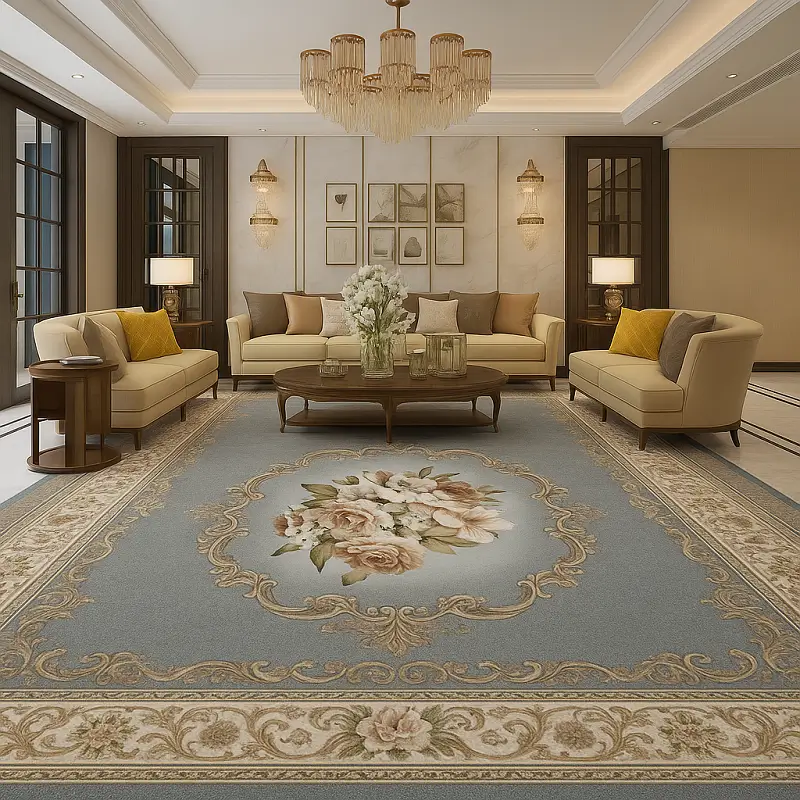
Traditional craftsmanship defines persian rugs dubai collections. Hand-knotted construction, natural dyes, and intricate motifs distinguish authentic pieces from mass-produced alternatives.
These rugs offer durability and artistic value but are best suited for controlled indoor environments. Understanding their characteristics helps buyers place them appropriately and preserve their quality.
Matching rug patterns with furniture and lighting layouts
Pattern scale should align with room size and lighting conditions. Large patterns suit spacious rooms, while smaller checks work better in compact areas. Lighting influences how patterns are perceived, affecting contrast and depth.
Careful coordination ensures visual harmony.
Outdoor rug installation tips for balconies and terraces
Outdoor rugs should be installed on clean, level surfaces. Using non-slip underlays improves stability, while adequate drainage prevents water retention.
Cleaning and care guidelines for indoor and exterior carpets
Routine cleaning varies by location. Outdoor rugs require rinsing and drying, while indoor rugs benefit from vacuuming and spot cleaning.
Conclusion and FAQs
Checkered and outdoor rugs offer versatility when chosen and placed correctly. Understanding materials and patterns ensures long-lasting performance.
FAQs
Are checkered rugs suitable for living rooms?
Yes, they provide balance and structure.
What materials are best for exterior carpets?
UV-resistant synthetic fibers perform best.
How can I identify quality Persian rugs?
Look for hand-knotting and natural dyes.
Do outdoor rugs fade in sunlight?
Quality materials resist fading.
Can one rug be used indoors and outdoors?
Only if designed specifically for both uses.