
Selecting the right rugs for religious, residential, and lifestyle spaces requires more than visual preference. Practical performance, material quality, and long-term comfort all play critical roles in the buying decision. In regions with heavy daily use and varied climate conditions, rugs must balance durability with cultural and aesthetic expectations. From prayer environments to living rooms, each rug category serves a distinct purpose and requires different evaluation criteria.
This guide explores how purpose-built mats, artisan-crafted rugs, and natural fiber options meet different needs while maintaining quality standards. It explains how usage frequency, material sourcing, and maintenance routines influence long-term value. By understanding how these rug types perform in real environments, buyers can make informed decisions that support both function and design without unnecessary replacement costs.
Understanding how ablution mats are designed for daily mosque use and comfort
Ablution areas demand flooring solutions that prioritize safety, hygiene, and consistent comfort. Rugs used in these spaces must withstand repeated exposure to water while maintaining slip resistance and surface stability. High-quality ablution mats are specifically engineered with water-tolerant backing, quick-dry fibers, and structured textures that support bare-foot use throughout the day.
Material selection is critical. Synthetic blends are often preferred for their resistance to mold and easy cleaning, while surface textures are designed to provide grip without irritating the skin. Thickness is carefully controlled to avoid water pooling and uneven footing.
Key functional design elements typically include:
- Anti-skid latex or rubber backing layers
- Dense fiber construction to prevent flattening
- Moisture-resistant yarns that dry quickly
- Edge binding to prevent fraying under heavy traffic
Together, these features ensure consistent performance in high-use religious settings where safety and durability cannot be compromised.
What makes a handmade rug valuable in modern and traditional interiors
A handcrafted rug offers value beyond surface appearance. Its worth is defined by craftsmanship, material integrity, and the time invested in its creation. A genuine handmade rug is produced through labor-intensive processes where artisans control knot density, color variation, and pattern symmetry by hand rather than automation.
These rugs adapt seamlessly to both modern and traditional interiors because they rely on balanced design principles rather than trends. Natural dyes age gracefully, developing character instead of fading abruptly. Handwoven structures also distribute wear more evenly, allowing the rug to maintain form even in frequently used spaces.
Beyond aesthetics, handmade rugs offer structural advantages:
- Stronger fiber interlocking that resists unraveling
- Better thermal insulation underfoot
- Repairability that extends lifespan significantly
This combination of durability, adaptability, and artistic value makes handmade rugs a long-term interior investment rather than a disposable furnishing.
Comparing natural fibers and finishes used in premium jute rugs in Dubai homes
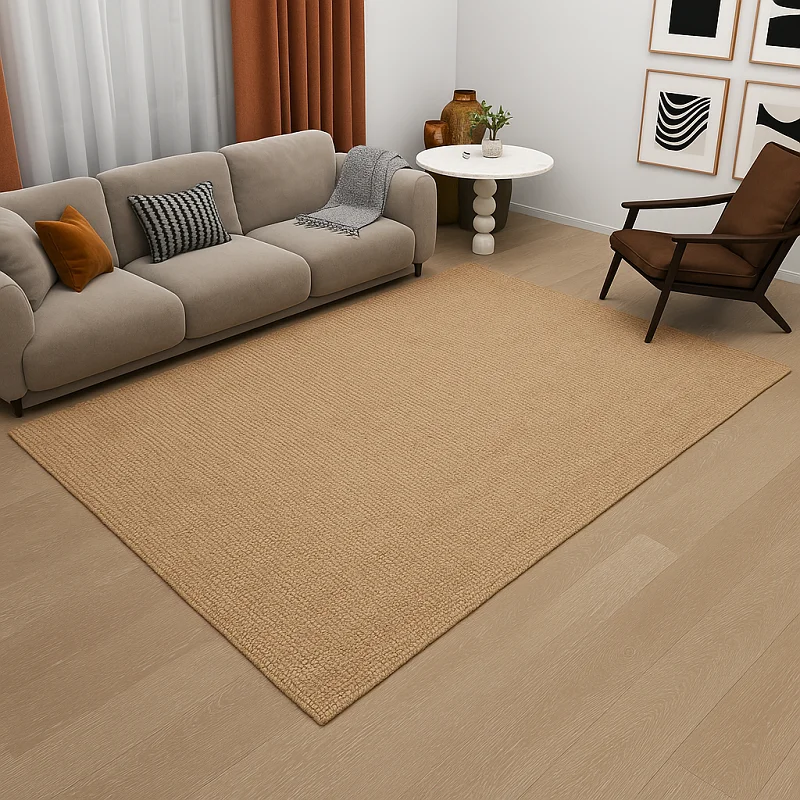
Natural fiber rugs have gained popularity for their sustainability and understated texture. Among them, jute rugs dubai homeowners choose are valued for their breathable structure and organic appearance. Jute fibers are derived from plant stalks, giving the rug a coarse yet warm texture that complements contemporary interiors.
Finishing techniques greatly influence performance. Tightly woven jute offers better resistance to shedding, while blended borders enhance edge strength. Some rugs include protective coatings to reduce moisture absorption, an important consideration in humid environments.
When evaluating jute rugs, buyers should compare:
- Fiber thickness and uniformity
- Tightness of weave and backing support
- Edge reinforcement methods
- Suitability for low- to medium-traffic areas
Although jute rugs are not ideal for wet zones, proper placement and finishing allow them to perform well in living rooms, bedrooms, and decorative spaces with controlled conditions.
Maintenance practices that extend the lifespan of prayer and area rugs
Proper maintenance determines whether a rug lasts years or requires early replacement. Daily-use rugs benefit from consistent care routines that address dirt accumulation before fibers degrade. Regular vacuuming removes abrasive particles that cause premature wear, especially in high-traffic prayer and entry areas.
Moisture control is equally important. Rugs exposed to water should be air-dried promptly to prevent odor buildup and fiber breakdown. Rotating rugs every few months ensures even wear and prevents traffic patterns from becoming permanent.
Effective maintenance practices include:
- Using low-suction vacuum settings on natural fibers
- Spot-cleaning spills immediately with mild solutions
- Avoiding direct sunlight to reduce color fading
- Scheduling professional cleaning annually for deep sanitation
These habits preserve texture, appearance, and hygiene without damaging the rug’s structure or finish.
Choosing rug sizes and textures for religious and residential spaces
Correct sizing enhances both comfort and spatial balance. In religious settings, rugs must align with movement patterns, allowing unobstructed transitions between standing and kneeling. Oversized rugs can bunch or crease, while undersized ones may shift during use.
Residential spaces demand a different approach. Living rooms benefit from rugs that anchor furniture layouts, while bedrooms require softer textures for barefoot comfort. Texture selection should reflect room function, with low-pile options preferred in high-traffic zones and thicker weaves reserved for relaxed environments.
Before purchasing, consider:
- Room dimensions and furniture placement
- Expected foot traffic levels
- Cleaning access and maintenance frequency
Accurate sizing and texture matching ensure the rug enhances usability instead of becoming a functional obstacle.
How climate and humidity affect natural rug materials in UAE
Climate plays a decisive role in rug longevity. High humidity levels can weaken natural fibers if moisture is trapped within the weave. Jute and wool require ventilation and controlled environments to maintain strength and prevent odor formation.
Air-conditioned interiors help regulate humidity, but rugs should still be lifted periodically to allow airflow beneath. In coastal or high-moisture regions, fiber selection becomes even more critical, as untreated natural materials can degrade faster.
Climate-aware rug management involves:
- Avoiding placement near moisture sources
- Using breathable underlays instead of plastic sheets
- Allowing seasonal airing to release trapped humidity
By adapting care routines to environmental conditions, natural rugs can maintain their structure and appearance for many years.
Conclusion and FAQs
Choosing the right rug involves understanding how design, material, and environment interact over time. Purpose-built mats support safety in religious spaces, handmade pieces add enduring value to interiors, and natural fiber rugs provide sustainable style when used correctly. Evaluating usage patterns and maintenance capacity ensures the rug performs as intended without unnecessary wear.
FAQs
What are ablution mats used for in mosques?
They provide safe, slip-resistant surfaces in wet prayer preparation areas.
Are handmade rugs better than machine-made options?
They typically offer greater durability, repairability, and artistic value.
Why are jute rugs popular in Dubai interiors?
They align with modern design trends and support sustainable material choices.
How do I clean natural fiber rugs safely?
Use low-suction vacuuming and spot clean with minimal moisture.
Which rug materials are best for daily use?
Durable fibers with strong backing and easy maintenance perform best in high-use areas.